
 中文简体
 English


Wanghe Industrial Park, Qixian Street, Keqiao District, Shaoxing City, Zhejiang Province, China.
A buyer sends a photo of a spool and a short message: "What is thread size?" The answer depends on whether the item in the photo is a machine screw or an embroidery thread. On a fastener, thread size is the diameter and pitch that determine fit. On an embroidery spool, thread size is the linear density and ply that determine stitch coverage, machine behavior, and the amount of thread on a cone. The same phrase describes two different measurement systems, and confusing them is a practical purchasing problem rather than a vocabulary issue.
The short answer is that thread size is a specification system, not one universal number. For mechanical threads, read the nominal diameter, pitch or threads per inch, standard series, and when relevant the tolerance class. For textile threads, read denier, tex, weight, ticket, ply, fiber, and finish. A number such as 120D/2 or M8 x 1.25 only makes sense when the system behind it is known.
This article separates those two meanings, shows how common callouts are read, explains tolerances and procurement risks, and connects textile thread sizing to embroidery production. The goal is not to memorize every chart. It is to ask for the right information before a purchase order is issued or a machine is threaded.
The Two Meanings of Thread Size
In fastener work, "thread size" normally refers to the geometry of a helical ridge on a cylindrical or tapered body. The size is expressed by a nominal diameter plus a pitch or thread count, often within a recognized standard. An M10 x 1.5 callout, for example, points to a metric thread with a nominal outside diameter of 10 mm and a pitch of 1.5 mm. A 1/4-20 UNC callout points to an inch-series thread with a nominal diameter of 1/4 inch and 20 threads per inch.
In textile work, "thread size" refers to the thickness or linear density of a yarn or thread. Denier expresses grams per 9,000 meters. Tex expresses grams per 1,000 meters. Commercial weight numbers and ticket numbers are indirect systems: higher weight numbers usually mean finer thread, but the rules are not universal across materials and manufacturers. Ply adds another layer because a 75D/2 thread is not the same construction as a 75D single yarn, even though both start from a 75 denier component.
Both meanings share one principle: the number must be tied to a standard, a method, and a tolerance. A fastener thread without a pitch is incomplete. A textile thread without fiber, ply, and finish is only partly specified. That is why a quotation based on "size 120" or "size 40" alone should trigger a follow-up question.
| Context | What thread size usually specifies | Typical notation | Main procurement risk |
|---|---|---|---|
| Mechanical fastener | Nominal diameter, pitch or threads per inch, series, and sometimes tolerance class | M8 x 1.25, 1/4-20 UNC, #10-32 UNF, 1/8-27 NPT | Fit failure, cross-threading, leakage on tapered pipe threads, or wrong mating part |
| Textile or embroidery thread | Linear density, ply, fiber, finish, and sometimes colorfastness or tenacity data | 75D/2, 120D/2, 150D/2, 40 wt, tex 27, ticket 120 | Wrong stitch coverage, tension problems, needle wear, shade variation, or inconsistent lot performance |
| Internal thread | Nominal diameter, pitch, and tolerance class of the mating internal thread | M6 x 1.0 6H, 1/4-20 UNC 2B | Gauge mismatch or assembly interference even when the nominal size appears correct |
| Pipe thread | Taper or straight form, nominal pipe size, threads per inch, and standard | 1/8-27 NPT, 1/2-14 NPT, G 1/2 | Leakage or poor engagement because pipe sizes are not measured as simple outside diameters |
Mechanical Thread Size: Diameter, Pitch, and Standard Series
For screws, bolts, nuts, and threaded fittings, thread size is read from a callout rather than guessed from the head. The nominal diameter is the basic size around which the thread is designed. It is close to, but not always identical with, the measured major diameter because allowances and tolerances apply. Pitch is the axial distance between corresponding points on adjacent threads in a metric thread. Threads per inch, or TPI, is the number of full threads in one inch of length in an inch-series thread.
A metric coarse thread is usually written without a pitch in casual conversation, but a complete specification should include it. M8 is commonly M8 x 1.25, yet M8 x 1.0 also exists as a fine pitch. An inch callout such as 1/4-20 UNC includes the nominal diameter, the thread count, and the series. UNC means unified coarse, UNF means unified fine, and UNEF means unified extra fine. These are not interchangeable just because the nominal diameter is the same.
Pipe threads add a separate complication. NPT is a tapered pipe thread standard in which the nominal size refers to the pipe size rather than the outside diameter of the thread. A 1/8-27 NPT fitting does not have a 1/8 inch outside thread diameter. The taper is part of the sealing behavior, so replacing an NPT fitting with a straight-thread fitting can create a leak even if the threads appear to engage.
Reading a Mechanical Thread Callout
Take M8 x 1.25. The M indicates a metric thread, 8 is the nominal outside diameter in millimeters, and 1.25 is the pitch in millimeters. Take 1/4-20 UNC. The 1/4 is the nominal diameter in inches, 20 is the number of threads per inch, and UNC is the unified coarse series. Take #10-32 UNF. The #10 is a numbered inch size, not a 10 mm size, 32 is threads per inch, and UNF is the unified fine series.
Thread class or tolerance grade may follow the basic callout. In metric practice, an external thread might be shown as 6g and an internal thread as 6H. In unified practice, classes such as 2A and 2B describe external and internal thread tolerances. These designations matter in precision assemblies, plated parts, and safety-related joints. A 1/4-20 bolt that meets a basic size is not automatically suitable for a application that requires a specific class of fit.
| Callout | Nominal diameter | Pitch or threads per inch | Series or form | Practical note |
|---|---|---|---|---|
| M6 x 1.0 | 6 mm | 1.0 mm pitch | Metric coarse | Common small machine screw size; confirm the mating internal thread class. |
| M8 x 1.25 | 8 mm | 1.25 mm pitch | Metric coarse | Do not assume every M8 part is coarse pitch without checking the drawing. |
| 1/4-20 UNC | 1/4 inch | 20 TPI | Unified coarse | Common inch-series size; a 1/4-28 UNF part will not interchange. |
| #10-32 UNF | 0.190 inch nominal | 32 TPI | Unified fine | The number 10 is an inch size designation, not a millimeter measurement. |
| 1/8-27 NPT | Nominal pipe size 1/8 | 27 TPI | Tapered pipe thread | The nominal size is not the outside thread diameter; sealing depends on taper and engagement. |
Textile Thread Size: Denier, Tex, Weight, Ticket, and Ply
Textile thread size is more varied because yarn and thread can be described by direct or indirect numbering systems. Direct systems describe mass per fixed length. Denier is the mass in grams of 9,000 meters of yarn. Tex is the mass in grams of 1,000 meters. Decitex is the mass in grams of 10,000 meters. In a direct system, a larger number generally means a heavier thread, assuming the same material and construction.
Indirect systems describe length per fixed mass. A higher commercial weight number usually means a finer thread because more length is required to reach a given weight. This is why 40 wt embroidery thread is generally heavier than 60 wt, even though 60 is the larger number. Ticket numbers are also indirect, but they are not a single global standard. Ticket 120 from one supplier may not perform identically to ticket 120 from another if the fiber, ply, twist, finish, or underlying count differs.
Ply is essential in embroidery thread. The notation 75D/2 means two plies of 75 denier yarn are twisted together. The approximate total linear density is around 150 denier before allowances for twist take-up, finish, and manufacturing tolerances. A 120D/2 thread is approximately 240 denier total, and a 150D/2 thread is approximately 300 denier total. These are useful reference points, not a complete performance specification. Two threads with the same total denier can still behave differently because of filament count, twist level, lubrication, tenacity, shrinkage, and colorant method.
Why 75D/2, 120D/2, and 150D/2 Are Common Reference Points
In machine embroidery, the 75D/2, 120D/2, and 150D/2 family is used to discuss the balance between fine detail and stitch coverage. A finer thread can help small lettering, dense logos, and designs that need crisp edges. A heavier thread can build coverage faster and may suit larger motifs, heavier fabrics, or applications where a more pronounced stitch is acceptable. The right choice still depends on the fabric, backing, needle, design density, and machine speed.
Denier alone does not tell a buyer how a thread will run. A 120D/2 polyester embroidery thread with good filament uniformity and consistent lubrication may run more predictably than a nominally similar thread with poor consistency. That is why supplier data should include the nominal count, ply, fiber type, recommended needle range, elongation, shrinkage, and colorfastness where relevant. For a broader comparison of the three common sizes, the site's selection guide for 75D/2, 120D/2, and 150D/2 is a useful companion to the basic definitions here.
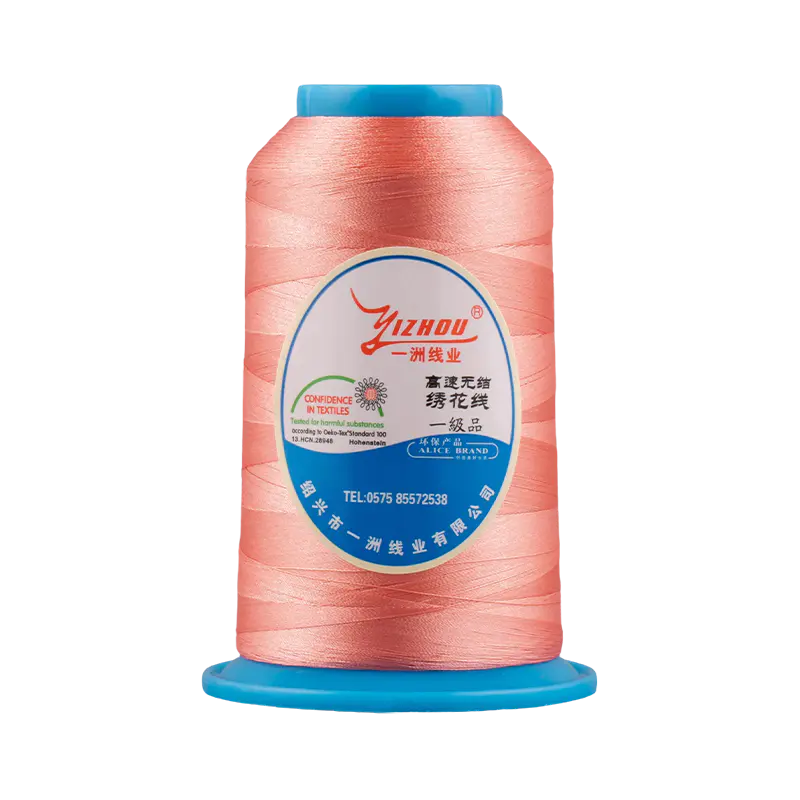 75D/2 Fine Polyester Embroidery ThreadFine two-ply thread for precise lettering, small logos and delicate fabrics, with high strength and smooth stitch detail.View Product →
| Notation or system | What it describes | Typical interpretation | What it does not tell you by itself |
|---|---|---|---|
| Denier | Mass in grams per 9,000 meters | Higher number generally means heavier linear density in the same construction | Ply, twist, filament count, finish, tenacity, or colorfastness |
| Tex | Mass in grams per 1,000 meters | A direct size system used in many textile specifications | Commercial weight equivalence or machine performance |
| Weight number | An indirect commercial size system | Higher number usually means finer thread, as with 40 wt versus 60 wt | A universal conversion to denier or ticket number |
| Ticket number | A commercial numbering system used in some thread categories | Useful within a supplier's own product system | A globally fixed linear density across all brands and materials |
| 75D/2 | Two plies of 75 denier yarn | Approximately 150 denier total before construction allowances | Stitch coverage, needle size, or suitability for a specific fabric |
| 120D/2 | Two plies of 120 denier yarn | Approximately 240 denier total before construction allowances | Tensile performance, shrinkage, or shade consistency |
| 150D/2 | Two plies of 150 denier yarn | Approximately 300 denier total before construction allowances | Whether a design is too dense for the chosen fabric and backing |
How Thread Size Affects Embroidery Performance
Thread size changes the physical relationship between needle, fabric, and stitch. A finer thread produces a narrower stitch path and can resolve small details, but it may require more stitches to fill an area. A heavier thread covers faster, yet it can look coarse on fine fabric or create bulk in tight designs. The practical result depends on the combination of thread size, stitch density, underlay, backing, needle size, and tension.
Needle choice is a common source of avoidable defects. If the needle eye and groove are too small for the thread, the thread may abrade, fray, or snap. If the needle is too large for a fine fabric, the perforation may be visible and the fabric may distort. A supplier's recommended needle range is therefore more useful than a single "best" needle number. The same 120D/2 thread can require a different needle in a dense logo on woven polyester than in a light design on a thin knit.
Tension settings also interact with thread size and finish. A heavier thread may need a different upper tension and bobbin adjustment than a finer thread, but tension should be set from a stitch sample rather than from the number alone. Lubrication, filament uniformity, and twist level affect how smoothly the thread passes through guides. A thread that tests well on a short sample can still show breaks on a long production run if lot consistency is poor.
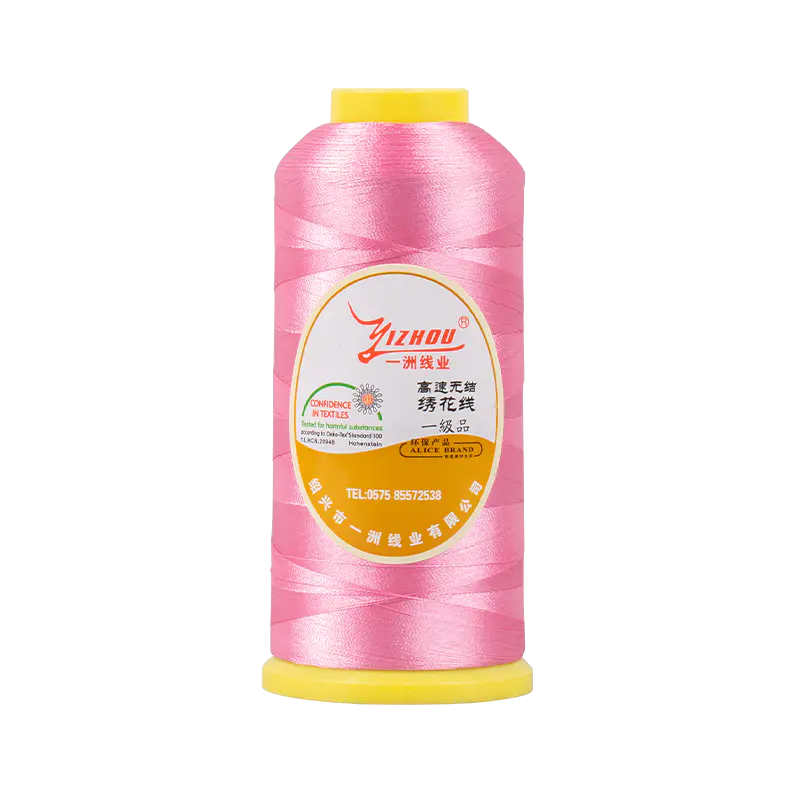 120D/2 Polyester Embroidery Thread for General ProductionBalanced two-ply thread for uniforms, sportswear and logo work, offering coverage and smooth high-speed machine performance.View Product →
Matching Thread Size to the End Use
For small lettering, fine outlines, and detailed logos, a finer thread such as 75D/2 is often considered when the fabric can support a dense stitch field. For general garment decoration and a broad mix of designs, 120D/2 is a common middle ground because it balances detail with coverage. For larger motifs, heavier fabrics, or designs where a bolder stitch is acceptable, 150D/2 may be more efficient. These are starting points for sampling, not rules that override the design file.
Fabric structure matters as much as thread size. A tight weave may resist stitch penetration and show needle marks. A loose knit may need stabilizer and careful density control to prevent puckering. A towel or fleece may require a heavier thread and a different backing strategy to keep the stitch from sinking into the pile. In each case, the thread size is one variable in a process window.
Colorant method can also influence the sourcing decision. Dope-dyed polyester embroidery thread is colored during fiber production rather than through conventional package dyeing. That can be relevant when a buyer needs consistent shade through a long program or wants to reduce certain wet-processing steps in the supply chain. The performance still has to be confirmed against the fabric, wash conditions, and light exposure of the final product.
How to Measure and Verify Thread Size
Verification should use the method that matches the thread type. Calipers and thread pitch gauges are appropriate for mechanical threads. For textile threads, a scale, a measured skein length, and a specification sheet are more useful than a visual comparison. A ruler placed against a spool does not reveal denier, ply, or tenacity.
Mechanical Thread Verification
- Clean the thread and remove burrs or debris that could distort a measurement.
- Measure the major diameter across the thread crests with a caliper for an external thread. For an internal thread, use the appropriate thread gauge or measuring method rather than a simple outside caliper reading.
- Identify the pitch with a metric pitch gauge or measure the distance across several thread crests and divide by the number of intervals.
- For inch threads, use a thread pitch gauge marked in threads per inch or count the threads over a known length.
- Confirm the standard series and, where required, the tolerance class from the drawing or mating part.
- Check the mating thread with a go and no-go gauge or a verified counterpart before production assembly.
A single caliper reading is not enough for a complete thread specification. The major diameter can be within a broad range while the pitch diameter or flank angle is out of tolerance. For critical joints, the drawing, standard, and inspection method should be agreed before purchase.
Textile Thread Verification
- Request the supplier's nominal count, ply, fiber, and finish data. Record whether the number is denier, tex, weight, ticket, or another commercial system.
- For direct size systems, verify linear density from a measured length and mass under the agreed conditioning method. Denier is grams per 9,000 meters; tex is grams per 1,000 meters.
- Check ply and twist against the specification. Two threads with the same total denier can differ in ply, twist direction, and surface finish.
- Test tensile strength, elongation, shrinkage, and colorfastness using methods agreed with the supplier and relevant to the end use.
- Run a stitch sample on the actual fabric with the production backing, needle, and machine settings. Record breaks, tension, puckering, and stitch appearance.
- Compare lot-to-lot shade and performance before releasing a large order. A first sample that passes does not guarantee later production consistency.
Tolerances should be written into the purchase specification. For mechanical threads, the applicable standard and tolerance class define acceptable limits. For textile threads, the buyer and supplier should agree on nominal count tolerance, tenacity, elongation, shrinkage, color difference, oil or lubrication content where relevant, and packaging. "About 120D" is not a production specification; a numeric range and a test method are.
Common Mistakes in Thread Size Specification
Most thread size errors come from missing context rather than from arithmetic. A callout copied without its standard, a weight number treated as a universal count, or a nominal diameter mistaken for a measured diameter can all produce a part or thread that looks correct but performs poorly.
- Mixing metric and inch threads. M6 and 1/4 inch are not interchangeable, and 6 mm is not the same as a #6 screw size.
- Treating a nominal diameter as the exact measured major diameter. Tolerances and coatings can shift the actual dimension.
- Omitting pitch from a metric callout. M8 x 1.25 and M8 x 1.0 have different mating requirements.
- Assuming a coarse thread is always the default. Fine pitch may be specified for adjustment, vibration, or wall thickness reasons.
- Confusing pipe nominal size with thread outside diameter, especially on NPT and BSP families.
- Using weight number as a direct substitute for denier. The two systems run in different directions and are not universally convertible.
- Ignoring ply. A 150D single yarn and a 75D/2 thread may have similar total linear density but different flexibility and surface behavior.
- Assuming ticket numbers mean the same thing across suppliers. Ticket systems are commercial and can vary with fiber and construction.
- Specifying thread size without fiber, finish, colorfastness, or shrinkage requirements. Those variables can decide whether a thread survives washing and wear.
- Approving a thread from a short sample only. Long-run machine performance depends on lot consistency, splice quality, and package winding.
A useful correction is to replace one-number requests with a short specification block. For a fastener, that block includes standard, nominal diameter, pitch or TPI, series, tolerance class, material, coating, and inspection method. For a textile thread, it includes fiber, nominal count system, count value, ply, twist or construction, finish, color standard, performance tests, and packaging. The extra detail prevents the most expensive kind of error: a technically plausible thread that is wrong for the application.
Procurement Checklist: What to Put on a Thread Size Specification
Purchasing teams often receive a thread description that is complete enough for a conversation but incomplete for a contract. The checklist below can be adapted to fasteners or textiles. The important discipline is to separate the size number from the performance requirements and the acceptance method.
| Specification field | Mechanical thread example | Textile thread example | Why it matters |
|---|---|---|---|
| Standard or system | ISO metric, Unified, NPT | Denier, tex, weight, ticket, or supplier system | Prevents a number from being interpreted in the wrong language |
| Nominal size | M8, 1/4 inch, #10, 1/8 NPT | 120D/2, tex 27, 40 wt, ticket 120 | Establishes the basic identity of the thread |
| Pitch or construction | 1.25 mm pitch, 20 TPI, tapered pipe form | Two-ply, twist direction, filament count where relevant | Controls fit, stitch geometry, flexibility, and appearance |
| Tolerance or performance range | 6g/6H, 2A/2B, coating allowance | Count tolerance, tenacity, elongation, shrinkage, color difference | Defines what is acceptable, not just what is nominal |
| Material and finish | Steel grade, stainless steel, zinc plating, lubrication | Polyester, rayon, cotton, dope dyed, lubricant, spin finish | Affects corrosion, sewability, hand feel, shade, and durability |
| Inspection method | Go/no-go gauge, pitch gauge, optical measurement | Length-and-mass test, tensile test, wash test, stitch trial | Makes acceptance repeatable between buyer and supplier |
| Packaging and traceability | Part number, lot, coating, quantity per box | Lot, cone weight, shade code, carton label, splice standard | Supports production control and corrective action |
For textile sourcing, the specification should also state the end use. An embroidery thread for a fashion logo on a woven shirt, a thread for a heavy bag, and a thread for a wash-resistant uniform are not validated by the same stitch trial. The buyer should identify the fabric, backing, needle, machine type, expected wash or dry-cleaning exposure, and any colorfastness requirement. The supplier can then recommend a size and construction rather than merely matching a number.
For mechanical sourcing, the drawing should identify whether the thread is external or internal, the tolerance class, the material and coating, and the inspection standard. If a part is plated after threading, the coating thickness can affect fit. If a part is used in a pressure or sealing application, the thread form and taper must be confirmed rather than inferred from the nominal size.
Site product pages can help narrow the textile conversation when the application is embroidery. The polyester embroidery thread range groups common denier and ply options so that buyers can compare specifications before requesting samples. The comparison should still be followed by a stitch trial and a written acceptance standard.
Putting Thread Size to Work in Embroidery Sourcing
For an embroidery thread manufacturer, thread size is only the entry point to a larger conversation about consistency. A buyer may start with 120D/2 because it is a familiar middle size, but the final approval should include fiber type, colorant method, tenacity, shrinkage, lubrication, cone density, and splice control. The same nominal size can run differently on high-speed machines if the package build or filament uniformity is inconsistent.
Shaoxing Yizhou Thread Co., Ltd. describes itself as a producer and seller of threads and yarns, with a product range that includes 75D/2, 120D/2, and 150D/2 polyester embroidery thread and a dope-dyed polyester embroidery thread line. The company profile states that it was established in 1998, exports to more than 30 countries, and reports annual production above 5,000 tons. Those figures are company statements, but they explain why the product discussion tends to focus on repeatable bulk supply rather than one-off spools.
A practical sourcing sequence is to define the stitch result first, then select the thread size. For fine detail, test a 75D/2 option and confirm that the design density does not exceed what the fabric can support. For general production, test 120D/2 across the actual fabric and backing combination. For heavier coverage or a bolder appearance, test 150D/2 and check whether the needle, tension, and design file need adjustment. In each case, record the stitch sample and the machine settings so that approval is tied to evidence.
Dope-dyed polyester embroidery thread is relevant when color consistency and processing discipline are part of the buying decision. Because the color is introduced during fiber production, the buyer should still confirm shade tolerance, colorfastness, and lot consistency under the agreed test method. A dope-dyed construction is not automatically a substitute for every dyed thread, but it can be a useful option when a program requires stable color through repeat orders.
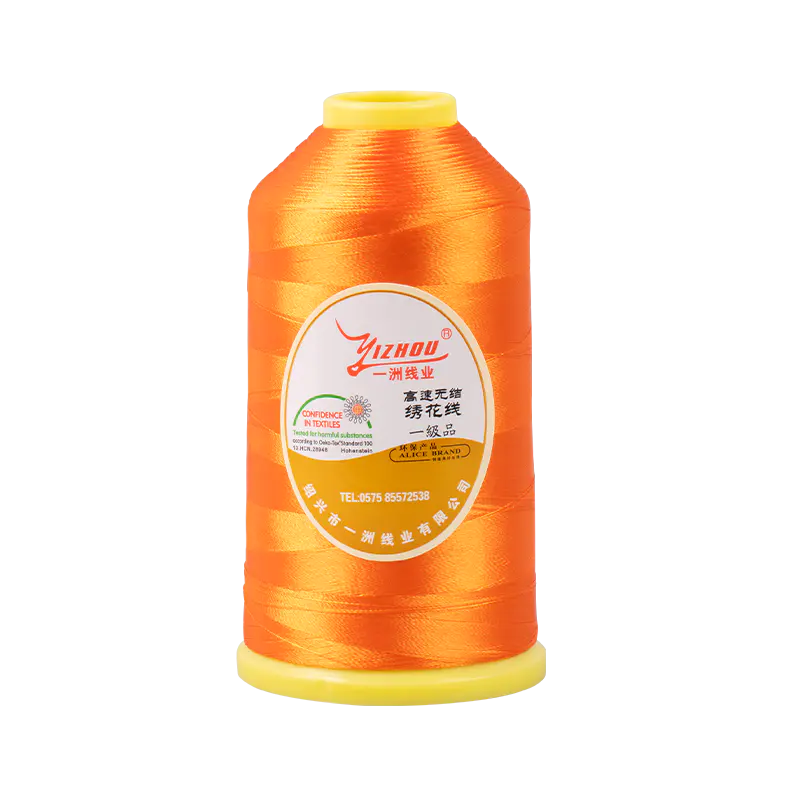 150D/2 Dope-Dyed Polyester Embroidery ThreadSolution-dyed thread for color-critical programs, with batch shade consistency and fastness suited to laundering-intensive apparel and accessories.View Product →
The most reliable purchasing habit is to write thread size as a compact specification rather than a nickname. For textile threads, include the system, nominal count, ply, fiber, colorant method, and key performance limits. For mechanical threads, include the standard, nominal diameter, pitch or TPI, series, tolerance class, material, and coating. That habit reduces the chance that a supplier quotes exactly what was asked for while the production team receives something that does not fit, stitch, seal, or wear as expected.
Conclusion
Thread size is not a single universal measurement. On a fastener, it is the diameter and pitch or thread count interpreted through a recognized standard. On a textile thread, it is a linear density and construction description shaped by denier, tex, weight, ticket, ply, fiber, and finish. The same phrase serves two industries because both need a way to describe a helical or twisted form, but the numbers are not interchangeable.
The safe approach is to ask four questions before approving a specification. Which measurement system is being used? What standard or construction details accompany the number? What tolerance or performance range applies? And what test will prove that the delivered thread meets the requirement? When those answers are documented, "what is thread size" becomes a useful starting point for fit, stitch quality, and repeatable supply rather than a source of costly assumptions.