
 中文简体
 English


Wanghe Industrial Park, Qixian Street, Keqiao District, Shaoxing City, Zhejiang Province, China.
A 9 mm monogram on a silk scarf can look crisp with a standard 40 wt thread, but it often looks crowded at the corners, heavy in the satin columns, and slightly bulky under the needle. A 60 wt embroidery thread changes that result: the line is finer, the lettering closes more cleanly, and delicate fabrics show less needle damage and less stitch bulk. The trade-off is equally practical. 60 wt thread is not simply a thinner version of 40 wt; it changes coverage, tension behavior, stitch density, and the amount of testing a buyer should do before a production run. If your job is fine lettering, small logos, heirloom detail, lace, or quilting accents, 60 wt can be the right tool. If your job is large fills, dark-fabric coverage, workwear, or high-abrasion decoration, it usually is not.
What 60 wt embroidery thread actually means
Thread weight is a length-per-weight relationship: a higher number generally means a finer thread. That is why 60 wt is finer than 40 wt, and why 60 wt feels lighter and produces a lower stitch profile. In polyester filament embroidery thread, suppliers often describe products by denier instead, such as 75D/2, 120D/2, or 150D/2. Denier refers to the linear density of the filament yarn, and the “/2” indicates two plies twisted together. Lower denier is finer, but weight and denier are not directly interchangeable labels. Fiber density, twist, ply, lubrication, and finishing all affect how a thread runs and how much coverage it gives.
That distinction matters at purchasing. A 60 wt cotton thread, a 60 wt rayon thread, and a fine polyester filament thread can all carry a “60 wt” label while behaving differently in a commercial embroidery machine. For polyester, ask for the actual linear density or denier range, ply structure, tenacity, elongation, and finish. If you need a plain-language reference on denier labels before comparing samples, this guide to 75D/2, 120D/2, and 150D/2 is a useful starting point. Do not assume that a 60 wt label equals a specific denier without confirmation from the supplier and a sewn test on your fabric.
Where 60 wt earns its place
60 wt embroidery thread is strongest when stitch geometry is small and the surface is sensitive. It reduces the visual weight of a monogram, keeps small text from filling in, and lets fine outlines sit closer together without the ridges that a heavier thread can create. It is also useful when the fabric cannot tolerate a large needle or dense stitch build-up: fine knits, lightweight wovens, sheer overlays, quilting detail, lace inserts, and delicate home textiles are typical fits.
- Monograms, small lettering, and narrow satin columns where a heavy thread would close the counters of letters.
- Fine outlines around embroidery motifs, especially when the design already has dense fills nearby.
- Quilting detail and bobbin work where a low-profile stitch is part of the visual effect.
- Lace, heirloom sewing, and delicate fabric decoration where needle holes and bulk are visible.
- Small logos on lightweight garments where the back of the embroidery must stay flexible.
It is a poor default for large fills, heavy outline work, coarse canvas, dark fabric that needs opaque coverage, and any product that will face abrasion. A finer thread has less mass per stitch, so it covers less area and often needs more passes to reach the same density. More passes can mean more needle penetrations, more production time, and more opportunity for puckering or thread breaks. That is not a defect of 60 wt thread; it is a design and process decision.
Coverage, hand, and machine behavior: a practical comparison
The table below is not a conversion chart. It is a selection aid for buyers and production teams comparing fine 60 wt embroidery thread with common polyester denier options. The right choice depends on fabric, design scale, stitch type, and the wash or wear standard the finished product must meet.
| Thread label | Typical role | Coverage and hand | Main production risk |
|---|---|---|---|
| 60 wt fine thread | Fine lettering, monograms, quilting detail, lace, delicate fabrics | Low profile, light coverage, soft hand, crisp small detail | Thread breaks, poor opacity on dark grounds, too many passes for fills |
| 40 wt standard thread | General logos, small fills, garment decoration | Medium profile, balanced coverage, broad machine compatibility | Bulk in very small text and heavier stitch build on delicate fabric |
| 75D/2 polyester | Fine polyester detail where a denier-based product is preferred | Fine, strong, low-profile; not an automatic 60 wt equivalent | Assuming label equivalence without testing tension and coverage |
| 120D/2 polyester | All-purpose machine embroidery, standard fills, durable decoration | Medium coverage, good durability, clear stitch definition | Overbuilding fine designs or using too large a needle on lightweight fabric |
| 150D/2 polyester | Bolder outlines, heavier fills, workwear, high-density decoration | Higher coverage, stronger visual weight, firm stitch build | Puckering, needle deflection, and excessive bulk on fine fabrics |
Machine settings that reduce breaks with fine thread
Fine thread punishes assumptions. A setting that runs a 40 wt thread cleanly may shred or loop a 60 wt thread, especially at high speed. Start with a smaller needle, lower mechanical stress, and a test matrix rather than a single sample. A typical starting point for 60 wt embroidery thread is a 60/8 to 70/10 sharp or embroidery needle, but the fabric and backing decide the final choice. Tightly woven fabrics may need a smaller needle and slower speed; loose knits may need a stable backing and slightly different tension.
- Set the needle size by fabric and thread, not by habit. A 70/10 needle is often more forgiving than a 60/8 on firm woven fabric, while a 60/8 may be better for very fine work.
- Reduce top tension gradually and check the stitch. If the thread loops underneath, the top tension may be too loose; if the thread breaks or the fabric puckers, inspect the path, needle, and bobbin before adding tension.
- Lower machine speed for the first sample. Fine thread has less mass to absorb heat and friction, so a high speed can expose poor needle quality or a rough thread path.
- Use a stitch length and density that suit the design. For fine lettering, short stitches improve detail, but too many penetrations can perforate delicate fabric or create a stiff patch.
- Match the bobbin thread to the job. A fine bobbin thread can reduce back-side bulk, but confirm that the tension balance holds through curves and direction changes.
Run the sample on the actual fabric with the actual backing, stabilizer, and needle. Check for flagging, puckering, needle holes, thread shredding, and back-side loops. A thread that sews well on a flat cotton swatch may fail on a stretch knit or a coated fabric, so the test must match the production condition.
Specify the thread, not just the weight
“60 wt embroidery thread” is a starting specification, not a purchase order. Buyers should define the fiber, ply, linear density or denier range, tenacity, elongation, twist direction, lubrication, colorfastness, shrinkage, and cone winding. For fine thread, the small details become commercial risks because the margin for error is narrower. A slight change in twist or finish can turn a clean-running cone into one that shreds, loops, or produces inconsistent stitch coverage.
- Confirm weight and denier or tex range, and state the acceptable tolerance in the purchase specification.
- Ask for tenacity and elongation data, then verify that the thread retains strength after dyeing and finishing.
- Check colorfastness to washing, rubbing, and light, especially for monograms and decorative details that will be laundered.
- Review cone density, winding quality, join or splice count, and whether the thread is waxed or otherwise lubricated.
- Test stitch quality on the target fabric at production speed, not only at a slow sample speed.
- Keep lot traceability for color and linear density so that a repeat order does not shift shade or hand.
How 60 wt compares with common polyester denier options
Many buyers arrive at 60 wt because they want finer detail than a standard 40 wt thread can deliver. In a polyester embroidery line, the closest practical starting point is usually a fine denier product rather than a direct weight conversion. Our polyester embroidery thread range uses denier labels, so the right method is to sample the finest suitable option, adjust needle and tension, and then compare the sewn result against a 60 wt reference. For fine polyester work with a low stitch profile, a 75D/2 two-ply thread is a logical test candidate.
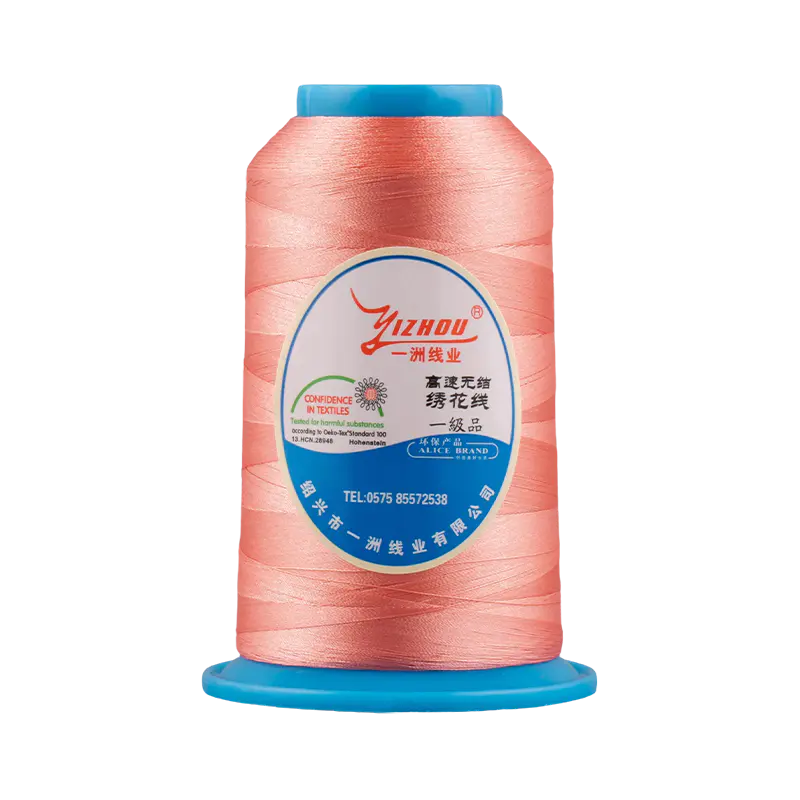 75D/2 Fine Polyester Embroidery ThreadA fine two-ply polyester option for low-profile detail; try it when 40 wt is too coarse and before moving to 120D/2.View Product →
A 120D/2 polyester thread sits in a more all-purpose zone. It gives clearer coverage than a fine 60 wt thread and is often a better match for standard garment logos, small fills, and designs where durability matters more than extreme fineness. If a 60 wt sample looks too light on the fabric, step up to a 120D/2 test before increasing stitch density on the fine thread. More density is not always the answer; a slightly heavier thread can produce a stronger stitch at lower stitch count.
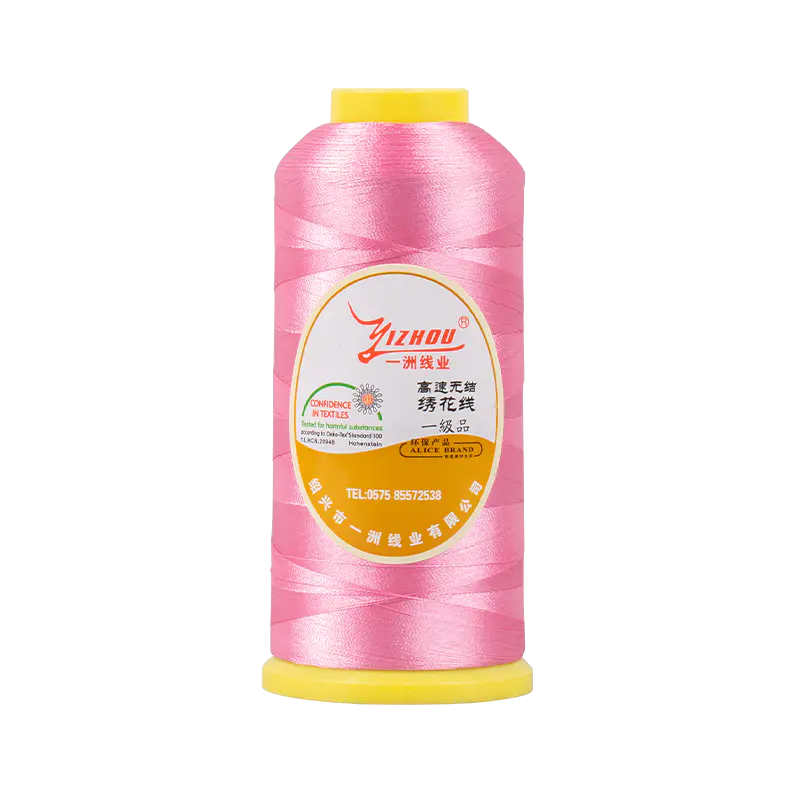 120D/2 All-Purpose Polyester Embroidery ThreadA two-ply workhorse for standard logos and small fills, offering clearer coverage when fine 60 wt looks too light.View Product →
Color, luster, and durability questions buyers ask
Fine polyester thread is generally strong for its size, but fine diameter means less material to absorb abrasion. A 60 wt polyester monogram may survive normal laundering well, while the same thread on a workwear logo or a bag that rubs against hard surfaces may wear faster than a heavier thread. Test the finished product, not only the thread cone. Check color migration, crocking, seam grin, and stitch loss after the wash cycle the end product will realistically face.
Color consistency is another practical issue. Fine stitches show shade differences clearly, and a small lot-to-lot variation can be visible across a monogram or a decorative border. Dope-dyed polyester can help where color consistency and through-color appearance matter, but it is not a universal substitute for fine 60 wt work. For heavier decorative programs where built-in color consistency is the priority, a 150D/2 dope-dyed polyester is a different tool with a different stitch profile.
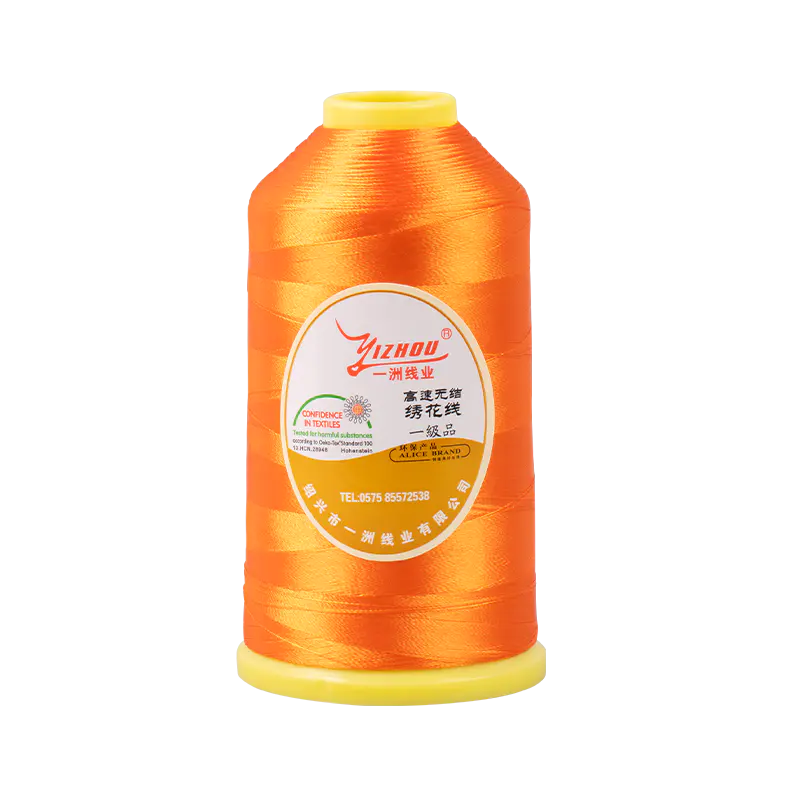 150D/2 Dope-Dyed Polyester Embroidery ThreadA solution-dyed two-ply thread for shade-critical decorative work where consistent color and durable coverage matter more than fine 60 wt detail.View Product →
Sourcing and quality control for fine thread
For a thread manufacturer, fine-count polyester is a quality-control test as much as a production item. The buyer should ask for a sealed sample from the production lot, not a specially prepared laboratory sample. The sample should run on the same machine type, needle size, fabric, backing, and speed as the planned order. Inspect the cone for winding defects, slubs, joins, and uneven tension. Then sew a test pattern that includes small lettering, tight curves, direction changes, and a short satin column. A thread that passes only a straight stitch test has not been proven for fine embroidery.
At the sourcing stage, agree on a simple approval standard: stitch appearance, break rate, color match, cone run-out, and wash performance. Keep a retained sample and a sewn swatch from each approved lot. That record is more useful than a certificate alone because it links the paperwork to the actual stitch. A manufacturer with experience in export markets should also be able to confirm cone weight, packaging, lead time, and lot traceability without ambiguity. The goal is not to find the cheapest 60 wt label; it is to find a fine thread that runs predictably in your specific process.
A simple decision rule before you buy
Choose 60 wt embroidery thread when the design is small, the fabric is sensitive, and a low stitch profile matters more than coverage. Test it with a smaller needle, reduced speed, and a tension check on the real fabric. Step up to a standard 40 wt or a medium polyester denier when the design needs opacity, fill coverage, or stronger abrasion resistance. If you are comparing a 60 wt requirement with a denier-based polyester range, sample the closest fine specification, then confirm color, hand, and wash performance before committing to production. The correct thread is the one that produces the required stitch on the required fabric with a stable, repeatable process—not simply the finest number on the label.